

 Whether you are initially in the field of investments or are looking for the best method of money management, you meet with foreign and financial terms, such as interests. Discover below what interest is, what are the effects of the interest rate and how to make optimal loans, savings or investments!
What do interest and interest rate mean?
The interests and interest rate are concepts that you need to understand when you want to borrow from banks in Romania or invest money, to give greater value to personal finances.
Interest
The interest represents the cost of the capital borrowed or, alternatively, the reward to renounce the immediate consumption of financial resources. Interest is an essential tool through which central banks regulate the economy, influence the inflation rate and stimulate or weigh economic growth.
Interest rate
The interest rate is a percentage expression of the actual quantity of money that you need to loan the amount. Therefore, the interest rate highlights the cost of the loan based on the amount borrowed.
The interest rate is established in different ways, depending on the context. In the case of a loan between two private parties, the interest rate is often dictated by the market. In the case of a bank loan, the rate is established by the bank, while in the case of the monetary policy rate, it is established by the Central Bank (Banca Nazionale della Romania – BNR). There are several factors that influence the interest rate, including inflation, supply and demand on the market, credit risk and monetary policy.
There are various types of interest rates. The fixed interest rate remains constant during the duration of the loan, which means that the amount paid in addition to the amount borrowed will not change. On the contrary, the variable interest rate can be modified according to the conditions of the financial market, which means that the payment amount can vary.
What are the main types of interest?
The interests represent the cost that a person or an entity pays to borrow money or is the amount that a person receives to invest capital. There are different types of interest:
Simple interest
The simple interest is calculated only on the basis of the initial amount that a person borrows or invests. For example, if you borrow 1000 she with a simple interest of 5% per year, you will pay 50 she per year as an interest. This does not accumulate, so the beneficiary will receive the same amount of money in any period of time. Simple interest is often used in short -term loans.
Compound interest
The compound interest, on the other hand, accumulates and adds to the main amount. Therefore, not only the amount borrowed, but the accumulated interest is subject to interest. For example, if you invest 1000 she with an interest of 5% per year, after the first year you will have 1050 she and in the second year you will earn interest not only to 1000 she, but 1050 she. Therefore, the composed interest can generate higher long -term profits and is often used for savings and investments.
Fixed interest
The fixed interest remains constant during the loan agreement, therefore it is foreseeable for both the borrower and the creditor, since the quantities of money to be paid or receive remain constant during the agreed term. It is preferred by people who want to plan their long -term budget, without worrying about possible rates.
Variable interest
The variable interest flows based on certain market conditions, which can lead to larger or smaller payments. Variable interest rates are often related to a reference index such as Robor, which is influenced by general economic conditions.
Each type of interest has its advantages and disadvantages and the choice of the most appropriate type of interest depends on your financial situation and the level of risk you propose. The simple interest is easier to calculate and understand, but does not take into account the effect of «interest in interest», which is the main advantage of the composed interest. Although composed interest may seem more advantageous, it is important to keep in mind that this can lead to significant increases in debt over time.
How to calculate different types of interest?
 The calculation of interest is a process that may seem complex, but in reality it is based on some essential elements. The main one represents the amount of money borrowed or invested. The interest rate is the annual percentage in which interest is calculated. The period of time for which the interest is calculated can vary: it is usually annual, but it can be monthly, quarterly, etc.
How to calculate the simple interest?
The simple interest is calculated by applying the interest rate to the main amount, for a certain period of time. The formula is D = P xrxt, where D is interest, P is the main, r is the interest rate and it is time. For example, if we have a loan of 1000 she, with an interest rate of 5% per year, for a period of 2 years, the interest will be 100 she (1000 x 0.05 x 2).
How to calculate the composed interest?
The compound interest is calculated by adding the interest to the main amount, so that the interest is calculated and on the basis of the previously accumulated interest. The formula is a = p (1 + r/n) ^ (nt), where a is the total value, P is the main, r is the interest rate, n is the number of composition periods per year and it is time in years. For example, for the same loan of 1000 she, with an interest rate of 5% per year, composed every year, for a period of 2 years, the total value will be 1102.5 she.
The impact of the interest rate on savings and loans
The interest rate plays an essential role in savings. This is a factor that can influence a person’s decision to save or not. When interest rates are higher, savings become more attractive, because the money deposited in an income statement or invested in a warehouse certificate will increase more quickly.
The interest rate and inflation are closely linked. When the inflation rate is high, banks usually increase interest rates to maintain economic balance. Take into consideration the variations of currency quotations and the variations of the loan conditions, since they have a direct impact on savings and loans.
There are several strategies for the impact of the interest rate. These include various financial products, such as savings in variable interests, fixed interest loans, etc.
The choice between different types of interest depends on several factors (risk profile, financial objectives, market conditions). It evaluates every time the advantages and disadvantages, in the context of personal needs.
latest posts published
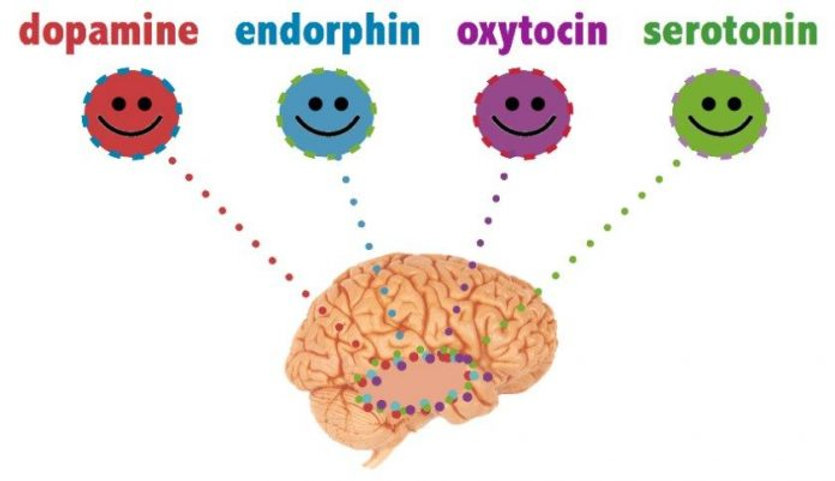
Hormones that determine financial behavior while making decisions under their influence

Payment methods Credits for consumption are getting rid of debt

Financial education for beginners – Cursvalutar.ro

What are the banking guarantees and what risks has a guarantor

Credit Bureau – Everything you need to know

Comfortable contract: taxes and exemptions

What they are and how it works
Strategies to withdraw money from investments

How to have a day without spending?