


The Forex market, also known as Forex (change market), is one of the largest and most dynamic financial markets in the world, influenced by a variety of economic, political and social factors. Throughout history, several key events have had a significant impact on the currency course and on the change of the change market. Here are some of the most important moments that have substantially changed this market:
The Standard of Gold (1870-1914)
Since the end of the nineteenth century, many nations have adopted the golden standard, a monetary system in which the value of a coin has been fixed according to a certain amount of gold. In this system, the exchange courses were relatively stable, since each currency was related to a certain gold value. Therefore, a stable currency exchange system has been created, with minimal fluctuations. But at the level of the currency course compared to macroeconomic factors, gold dependence limited the economic flexibility of countries during economic crises.
The end of the Gold Standard and the great economic crisis (1929-1933)
The great economic crisis, also called great depression, has forced many countries to give up the Gold Standard to regain the necessary economic flexibility to stimulate their economies. During this global financial collapse, many countries devalued their currencies, which led to volatility on the change market. The end of the Gold Standard has marked a great change in the way nations managed the exchange courses, introducing more fluctuations and government interventions.
Bretton Woods Agreement (1944)
At the end of the Second World War, in 1944, the allied states negotiated the Bretton Woods agreement, which established a new international foreign currency system. National currencies were set to the US dollar, which, in turn, was convertible in gold to a fixed frequency of $ 35 for ONCIA. Therefore, a fixed exchange rate system was created, which lasted until the early 70s. During this period, the US dollar became the main international reserve currency.
The collapse of the Bretton Woods system (1971-1973)
In 1971, the president of the United States Richard Nixon suspended the convertibility of the golden dollar, ending the Bretton Woods system. This event is known how Shock Nixon. Until 1973, the main world economies went to floating exchange rates, where the value of the coins was determined by the financial market. The transition to a floating courses system led to greater volatility on the currency market, since exchange rates have started to be influenced by demand and demand on the market and not by fixed rates.

Agreement of Plaza (1985)
In the 80s, the US dollar became very strong, which hit the exports of the United States. In 1985, five of the major savings in the world (United States, Japan, Western Germany, France and the United Kingdom) signed the Plaza agreement to coordinate the interventions on the market and devalue the dollar.
The agreement led to a significant amortization of the US dollar and was an example of international coordination in terms of interventions on the change market. At the same time, he opened the way to other coordinated interventions in the coming years.
Asian Financial Crisis (1997-1998)
The crisis began in Thailand and spread rapidly in other emerging savings in the South -est Asia. The coins in the region, such as the Thai Baht and the Rape Indonesia, have undergone a huge depreciation and many savings have entered the recession. This moment highlighted the vulnerability of the emerging markets in the flows of speculative capitals and the volatility of floating currencies. He led to important interventions by the International Monetary Fund (FMI) and central banks to stabilize the currencies concerned.
Global Financial Crisis (2008-2009)
The global financial crisis was triggered by the collapse of the United States real estate market and led to the collapse of numerous large financial institutions. During this crisis, the US dollar and other «safe refuge» coins (such as the Japanese yen and the Swiss franc) were significantly appreciated, while emerging economies are amortized. The demand for refuge currencies has been emphasized in periods of economic uncertainty and important interventions by the central banks, including quantitative relaxation and extremely low interest rates, which have influenced long -term long -term markets.
Brexit (2016)
The 2016 vote in which the United Kingdom decided to leave the European Union had an immediate effect on the pound, which was suddenly cushioned by other main currencies. The effects of Brexit have shown that the main political decisions can quickly and drastically influence currency markets. The uncertainty relating to the future of commercial and economic relations has contributed to the volatility of the pound in the years that followed. The pound remained volatile in the post-Brexit period, in particular in relation to commercial negotiations.
Pandemic Covid-19 (2020)
The pandemic caused a global economic crisis, triggering strong fluctuations on the change market. At the beginning of the pandemic, the US dollar appreciated due to its refuge currency status, but later, quantitative relaxation measures and uncertainty led to damage. The coins of emerging economies suffered more, while others, such as Chinese yuan, remained relatively stable.
The year 2020 represented a unique moment in the history of the exchange rate and underlined the importance of the refuge coins in periods of global crisis. In addition, it has influenced the changes in the monetary and fiscal strategies of the countries, with direct effects on exchange rates.
These events represent only a few key moments in the history of the exchange rate, which have remodeled Piazza Forex and influenced the global dynamics of the coins. The change market remains extremely sensitive to economic, political and social factors, therefore it is one of the most complex and unpredictable financial markets in the world.
latest posts published
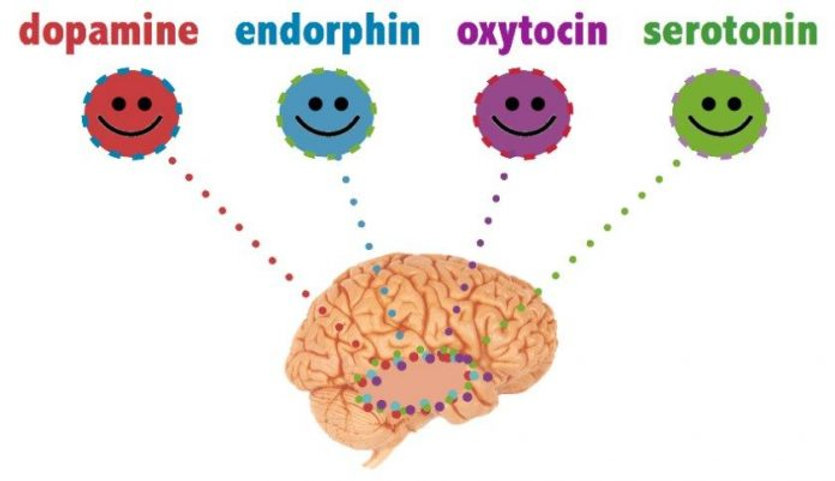
Hormones that determine financial behavior while making decisions under their influence

Payment methods Credits for consumption are getting rid of debt

Financial education for beginners – Cursvalutar.ro

What are the banking guarantees and what risks has a guarantor
Credit Bureau – Everything you need to know

Comfortable contract: taxes and exemptions

What they are and how it works
Strategies to withdraw money from investments
How to have a day without spending?