
What they are and how we invest in them.
The bonds are debt securities with which an authorized issuer borrows from the owners of bonds and is obliged, in a period, to repay the value of the obligation plus interest (coupon).
That is, a government or company needs money and, in order not to borrow from the bank, to issue these securities. Other companies, funds or people buy them and the issuer makes money. Obviously the issuer undertakes that, after a certain period, he will return the amount borrowed the interest more.

What terms we should know when we invest in bonds:
-
Debtor / issuer: The one who emits the link and borrows
-
Creditor / owner: The one who acquires the link and grants a loan to the debtor
-
Nominal value: The amount of money that the creditor will receive for a bond unit on the deadline.
-
Coupon rate: the interest rate that the debtor pays, calculated to the nominal value
-
Date of maturity It is the date on which the debtor will pay the creditor the nominal value of the obligation
-
The price of the price It is the price to which the debtor acquires the obligation
-
return represents the profit obtained by the creditor from the investment investment.
– Depending on the interest:
or Bonds with fixed coupon: The interest is maintained unchanged until maturity
or Variable coupon bonds: Interesting / coupon depends on the inflation rate or an index of the monetary market (example, Robor, Euribor, Ling, etc.).
or Zero coupon bonds: they are issued at a price lower than the nominal value and at the deadline the creditor receives the highest nominal value, the income is generated by the price difference.
– Depending on the broadcaster:
or Government bonds:
-
Second titles: they have a maturity of over a year and a fixed coupon -percenta,
-
Treasury certificates: have a maturity of less than one year and zero coupons. They are issued at a price lower than the nominal value (the one that is reimbursed to maturity).
or Municipal bonds – issued by the Municipalities or Councils of County for the financing of various investment projects
or Corporate bonds – These are issued by companies for the development of activities.
Example: the Romanian state needs money, issues state securities at the value of 100 euros / piece and commits that after 5 years to return 100 euros / piece plus 5%of interest. The percentage of interest remains fixed during the period.
Two essential terms for bonds exchanged on actions:
Example we have an obligation with a nominal value of 100 Ron and a 10%coupon and today
The clean price is 98%, i.e. 98 Ron. The obligation pays the coupon every year and on the date of the transaction we are in the middle of the period between the payment date of the last coupon and the next payment date.
The dirty price is equal to the clean price on the day of payment of the coupon.
What risks we take when we invest in bonds:
According to the three main rating agencies (Moody’s, Standard & Poor’s and Fitch) the links are divided into two categories:
or Degree of investment: low risk of non -payment of the debt, strong credit profile, lower interest rates. High possibilities to recover your money.
or speculative degree («With high performance»/»garbage»): high risk of non -fulling, weak credit profile, higher interest rates. Great possibilities not to recover all your money.
-
The price risk It appears if you want to sell bonds before maturity. The price of an obligation on the bag varies according to: the rate of the coupon compared to the level of interest, the term until the expiry, the risk of credit. The price on the stock market can be lower than the initial purchase price.
As a rule, the relationship between the evolution of interest and the price of the obligations is reverse: when the interest increases the price of the previously issued obligations decreases on the stock exchange and when the interest decreases, the price of the previously issued obligations increases on the share market.
How are you invested in bonds?
Diversified investments!
latest posts published
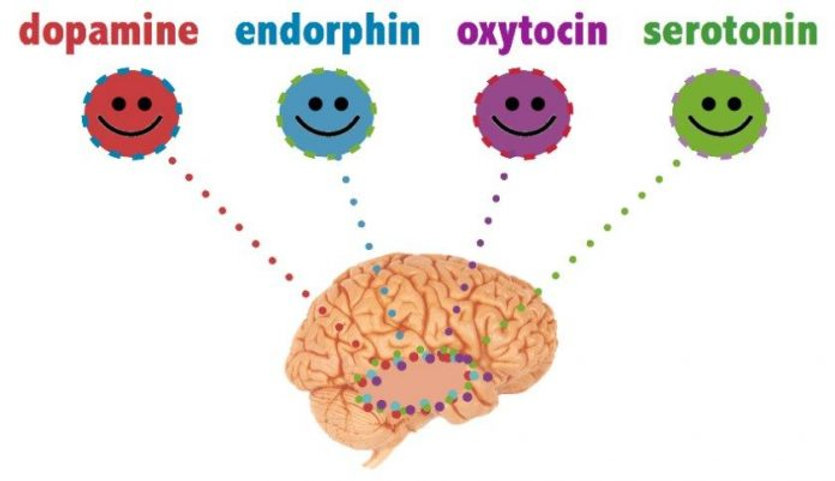
Hormones that determine financial behavior while making decisions under their influence

Payment methods Credits for consumption are getting rid of debt
Financial education for beginners – Cursvalutar.ro

What are the banking guarantees and what risks has a guarantor
Credit Bureau – Everything you need to know

Comfortable contract: taxes and exemptions
What they are and how it works
Strategies to withdraw money from investments
How to have a day without spending?