

The economic-financial basic indicator, the inflation rate represents the measure in which the general level of prices for goods and services increases, for a fixed period. Its effect consists in reducing the purchasing power of the currency in that country. It still discovers how this inflationary dynamic influences the main currency courses, at national, regional and international level.
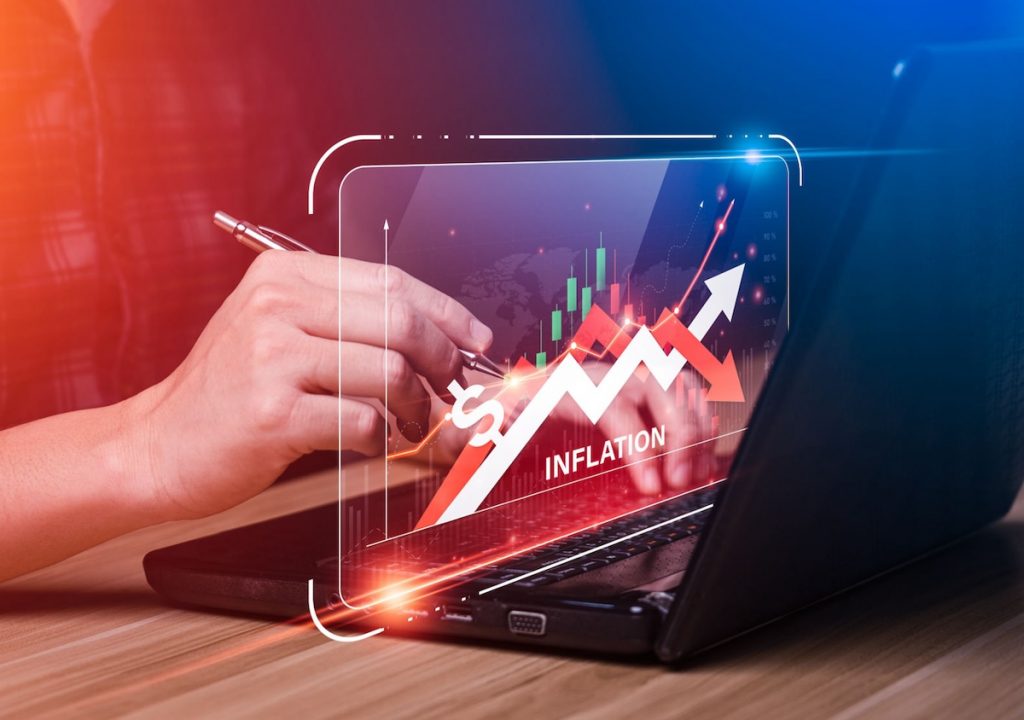
Inflation rate and perception of the value of a currency
The high inflation can lead to the demanding of the currency in relation to other currencies. This happens because inflation erodes the purchasing power of the internal currency, which becomes less attractive for investors and for people or companies holding this currency.
You already know why inflation occurs, but it is important to consider that the inflation rate is directly related to the value of a currency. When the inflation rate is increasing, the value of the currency tends to decrease. This is due to the fact that, with increasing prices, the purchasing power of the currency decreases, which means that the same amount of money will acquire less than before.
Inflationary phenomena significantly influence the exchange rate of a currency, in the sense that a high inflation rate can lead to a compromise of the national currency in relation to other currencies. Therefore, inflation has a remarkable impact on the perception of the value of a currency. If a person maintains their savings in a specific currency and the inflation rate increases, the purchasing power of this currency will decrease. This can lead to a negative perception of the value of that currency.
The monetary policy of the central banks: how is it influenced by the inflation rate?
In an attempt to control inflation, central banks can adjust interest rates. A higher interest rate can attract foreign investments to the search for better yields, which can appreciate the currency. On the contrary, low interest rates can lead to the demanding of the currency.
The tools that central banks use to control inflation include:
- The reference rate of interest – It is a strong tool, because it affects the cost of loans and, implicitly, the level of expenses and investments in the economy;
- the compulsory reserve coefficient – Check the amount of money that banks must maintain, thus limiting the amount they can borrow;
- Open market operations – includes the purchase and sale of government securities, to influence the currency offer.
If the inflation rate is too high, central banks can increase the interest rate, slow down the economy and reduce inflationary pressure. On the contrary, if the inflation rate is too low or if there is a deflation, central banks can reduce the interest rate, to stimulate expenses and investments.
Comparing the relative inflation
If the inflation rate in a country is lower than the rates of other states, the currency of that country could be appreciated than the currencies of the countries with higher inflation rates. Investors will try to have activities in countries with low inflation, as it suggests economic stability and the increase in purchasing power.
If you think about how to take advantage of inflation, you must consider these transnational aspects. A greater inflation means that the purchasing power of the respective currency decreases, which makes it less attractive for investors and operators.

Inflationary expectations and main exchange courses
Not only the current inflation, but also expectations for future inflation can influence gearbox courses. If the market provides that inflation grows in a certain country, investors will start selling the currency of that country before the expected amount. It is a domino effect, in which the cause-effect relationship is dynamic.
In particular, a higher inflation rate leads to the demort of the national currency in relation to other currencies. The reason is that, in the conditions of greater inflation, the purchasing power of the national currency decreases, which determines a greater demand for foreign currencies. This is a vicious circle must be managed correctly, to prevent the establishment of a climate of economic, financial and currency instability.
The impact on the commercial scale
Inflation also affects the competitiveness of a country’s exports. If internal prices increase more quickly than external ones, exported products can become more expensive and less competitive on the international market. The commercial balance is implicitly, the value of currency recordings decreases and evolutions.
Inflation and commercial balance are closely linked, with a series of mutual effects that can model the economy of a country:
-
A high inflation rate decreases the competitiveness of exports – The prices of goods and services become too high for foreign markets. This phenomenon can lead to a decrease in commercial surplus or even a deficit. On the other hand, if a country matters a lot, the high inflation can lead to an increase in commercial deficit, because the value of imports increases. Therefore, inflation can have a double negative effect on commercial scale;
-
Inflation affects the exchange rate in international commercial transactions -If the inflation rate in a country is higher than other countries, the value of that country will decrease compared to other coins. This can involve an increase in import costs and a decrease in the value of exports, negatively affecting the commercial balance. With the help of an online foreign currency converter, you can see these fluctuations in real time, also important for individuals and companies;
-
The evolution of the inflation rate affects the monetary policy of a country – The central bank can use tools such as the interest rate to control inflation. In the context of a high inflation, the central bank can increase the interest rate, which helps to reduce the application for import and regulate the commercial scale;
-
Inflation has a great impact on foreign investments -InVestor of other states can be reluctant to invest in a country with a high inflation rate, since this can erode investment returns. The reluctance of investors leads to a decrease in capital flows, with a negative impact on the commercial balance.
The inflation rate affects not only buyers and local economies, but also international exchange values. The fluctuations of the main currencies influence investment decisions and capital flows all over the world. Constantly informed from reliable sources, such as Cursvalutar.ro and make decisions based on updated data on the main exchange courses!
latest posts published

Hormones that determine financial behavior while making decisions under their influence

Payment methods Credits for consumption are getting rid of debt

Financial education for beginners – Cursvalutar.ro

What are the banking guarantees and what risks has a guarantor
Credit Bureau – Everything you need to know

Comfortable contract: taxes and exemptions

What they are and how it works
Strategies to withdraw money from investments
How to have a day without spending?